ReFold Tote
Softgoods Product Development · Fall 2023 · Team of Three · Boulder, CO

The Brief
Design and manufacture a product from diverted materials, then sell it at a local market in Boulder. Sales had to cover our material overhead and return a profit to the studio, which went back into tools and equipment. Our class defined the product categories together; my team of three was assigned outdoor softgoods.
That last constraint shaped everything. It wasn't enough to design something good. It had to be producible by three people in a semester, and someone had to be willing to pay for it.
The Concept We Killed
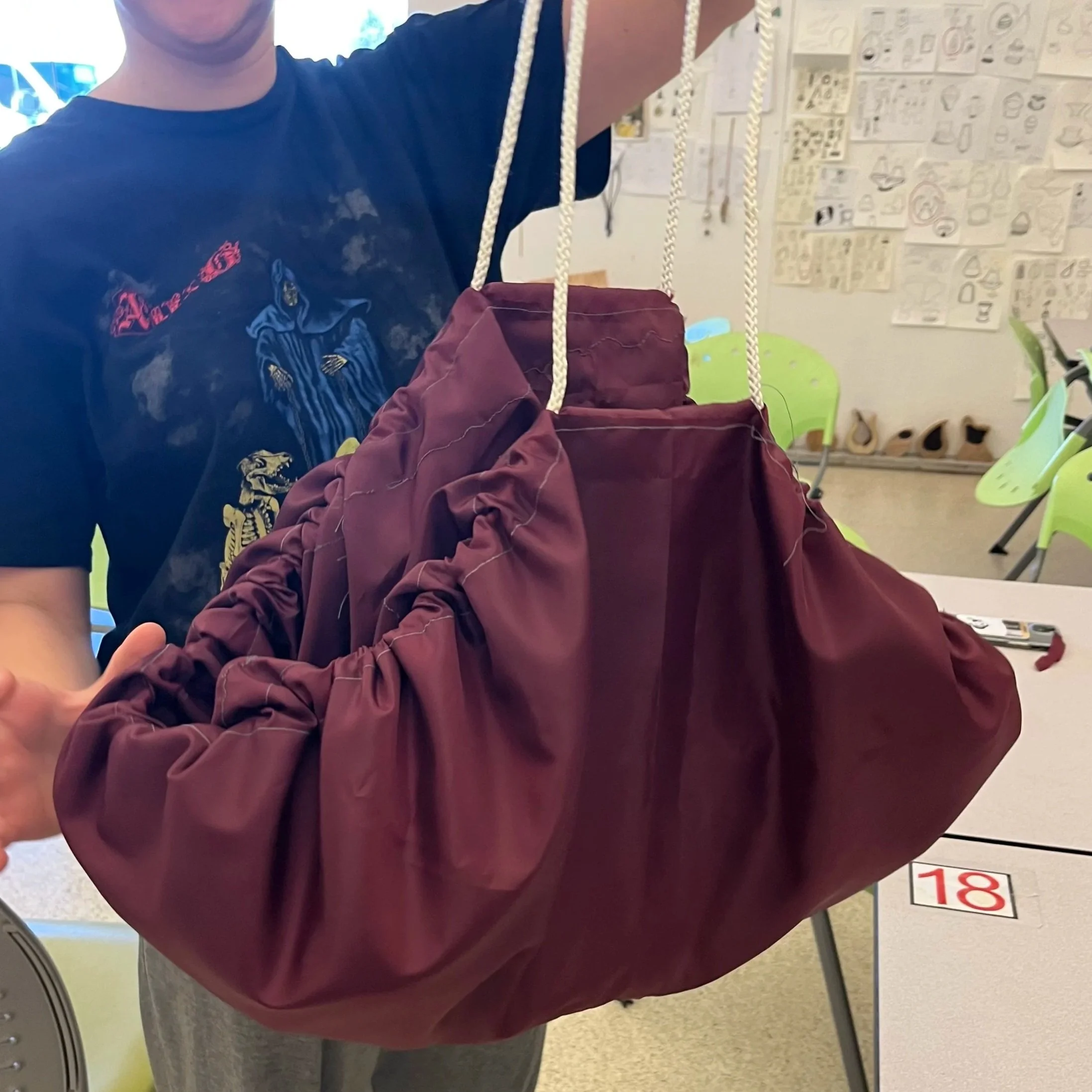
We started somewhere else: a cinch bag, built from a circular blanket with a drawstring routed around the inside edge, pulling closed into a sack.
We killed it for two reasons.
The Geometry Worked Against It
The drawstring had to run the full perimeter of the blanket, which meant it was always going to be long. Cinched shut, the bag hung nearly to the floor, and there was no comfortable way to hold it. Closed, it was bulky, and the proportions fell apart. Refining the design wouldn't fix any of that; it followed directly from how the closure worked.
It Couldn't Be Made Cleanly
Closing the blanket meant turning it inside out and hand-stitching the final seam shut. On a single prototype, that's acceptable. Across a production run, it's slow, inconsistent, and visible on the finished product.
The second reason is what drove the decision. We wanted something we could build fifteen times and have the fifteenth look like the first.
The ReFold
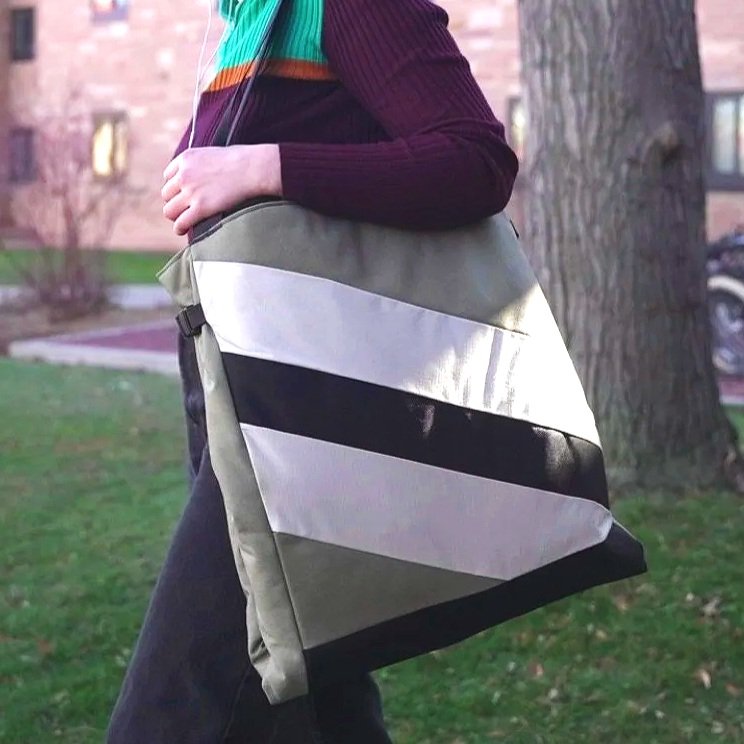
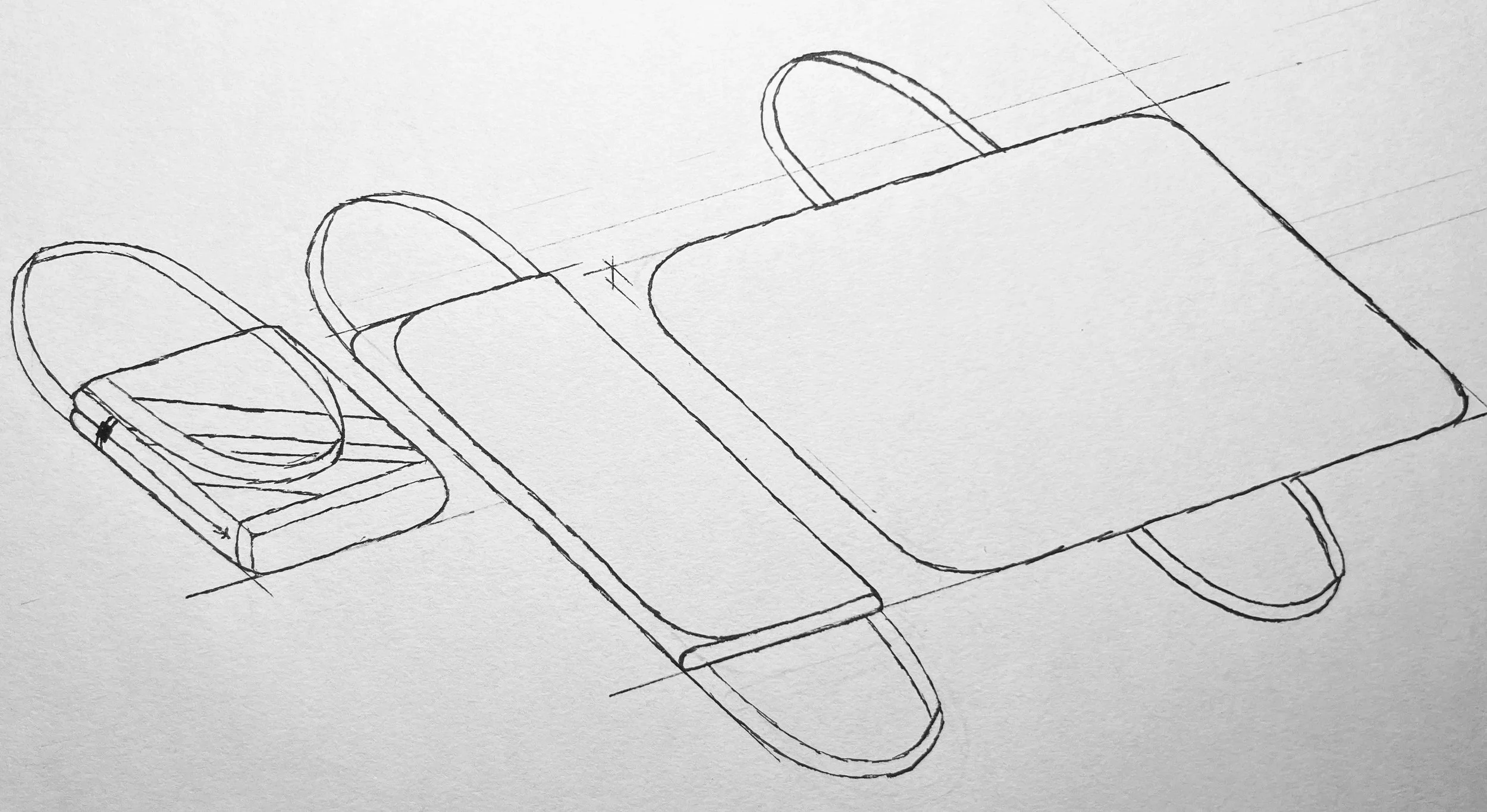
A picnic blanket that folds and buckles into a tote with two large exterior pockets. Open, it's a 46-inch-by-38-inch blanket, enough for two people to sit on. Folded, it's a 19-inch-by-16-inch bag that carries itself and everything you bring with it wherever you go, ready to open again.
A versatile, eco-friendly tote bag that effortlessly transforms into a padded outdoor blanket.

Materials and Sourcing
Moving blankets, bought secondhand off Facebook Marketplace at roughly $5 each.
Nylon webbing and surplus outdoor shell fabric, donated by Cotopaxi. Our professor had the contact; we reached out to request the materials ourselves.
Magnetic buckles, the only new component we purchased.
Why Magnets
We tried standard buckles first. They were slow and clunky; you had to stop, find both halves, and thread them together. Magnetic buckles pull themselves closed as you fold the blanket down, so the closure happens inside the motion you're already making instead of as a separate step afterward. That was the deciding factor, not cost.

Pattern Development
The pattern took more iteration than anything else on the project, and it all came down to scale. The blanket had to be big enough for two people to sit on comfortably. The bag had to be small enough that nobody minded carrying it. We landed at 46 inches by 38 inches open, folding down to 19 inches by 16 inches: a real blanket that still hangs off one shoulder.
Production and Sale

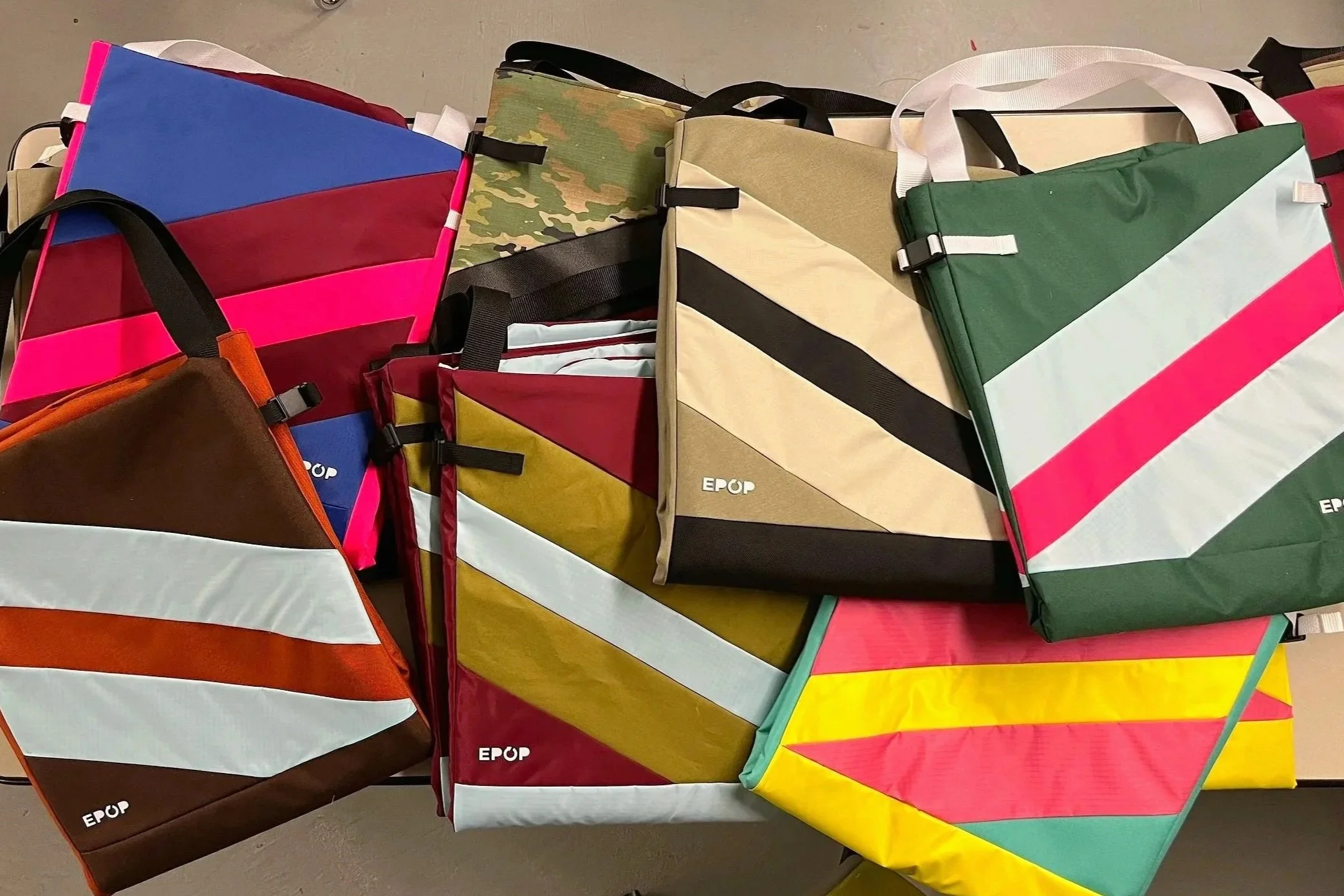
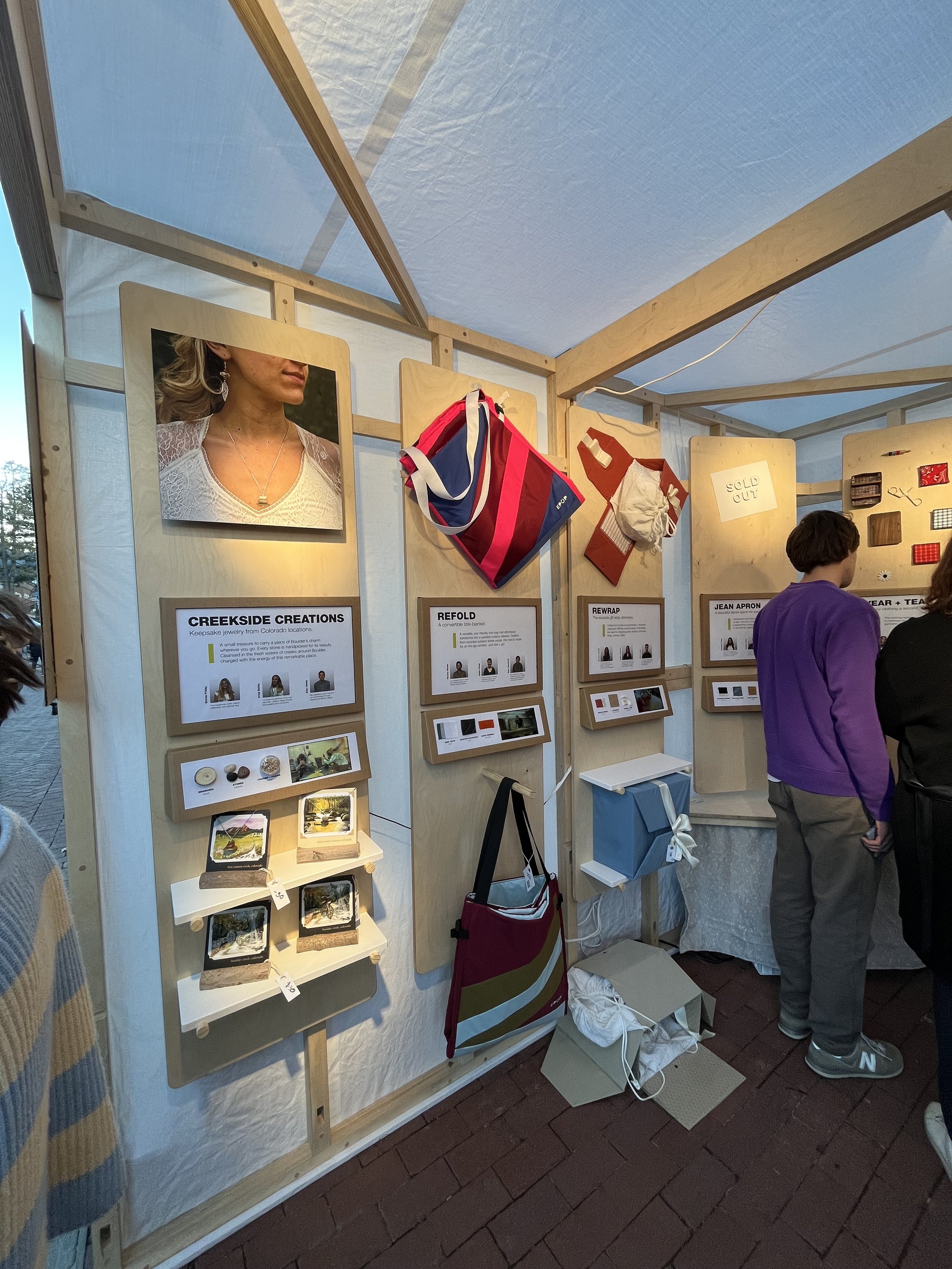
A team of three handmade 15 units and sold them at the Boulder market for $65 each. We sold all fifteen in under two days.
Who Actually Bought It
We were assigned outdoor softgoods, and we designed for that: picnics, camping, sports games, the beach. The people who bought it were parents of young kids: the park, the beach, sitting through a soccer game, hauling toys home afterward.
The product was right. Our intended target audience was drawn in.
What I’d Change at 500
Sourcing Breaks First
Secondhand moving blankets aren’t a supply chain, and donated surplus isn't one either; Cotopaxi's generosity covered fifteen units, not five hundred. At volume, this becomes a real material specification and a real vendor relationship, which changes the cost structure and probably the product along with it.
The Straps Need Proper Reinforcement
Our strap stitching held for fifteen totes carried by people who knew how they were made. At 500 units, customers loaded them heavier than we designed for, and the strap-to-body joint is the first thing to fail. It needs bar-tacking or a reinforced backing patch, a change I'd make before selling another unit.
And the Buyer Isn't Who We Designed For
Fifteen units told us the outdoor framing was wrong. At 500, I'd want to work more closely with our target audience to ensure we meet their needs. When we first designed the Refold, our main focus was the time constraint, sourcing materials, and learning to sew.