MM1 Flat-Pack Chair
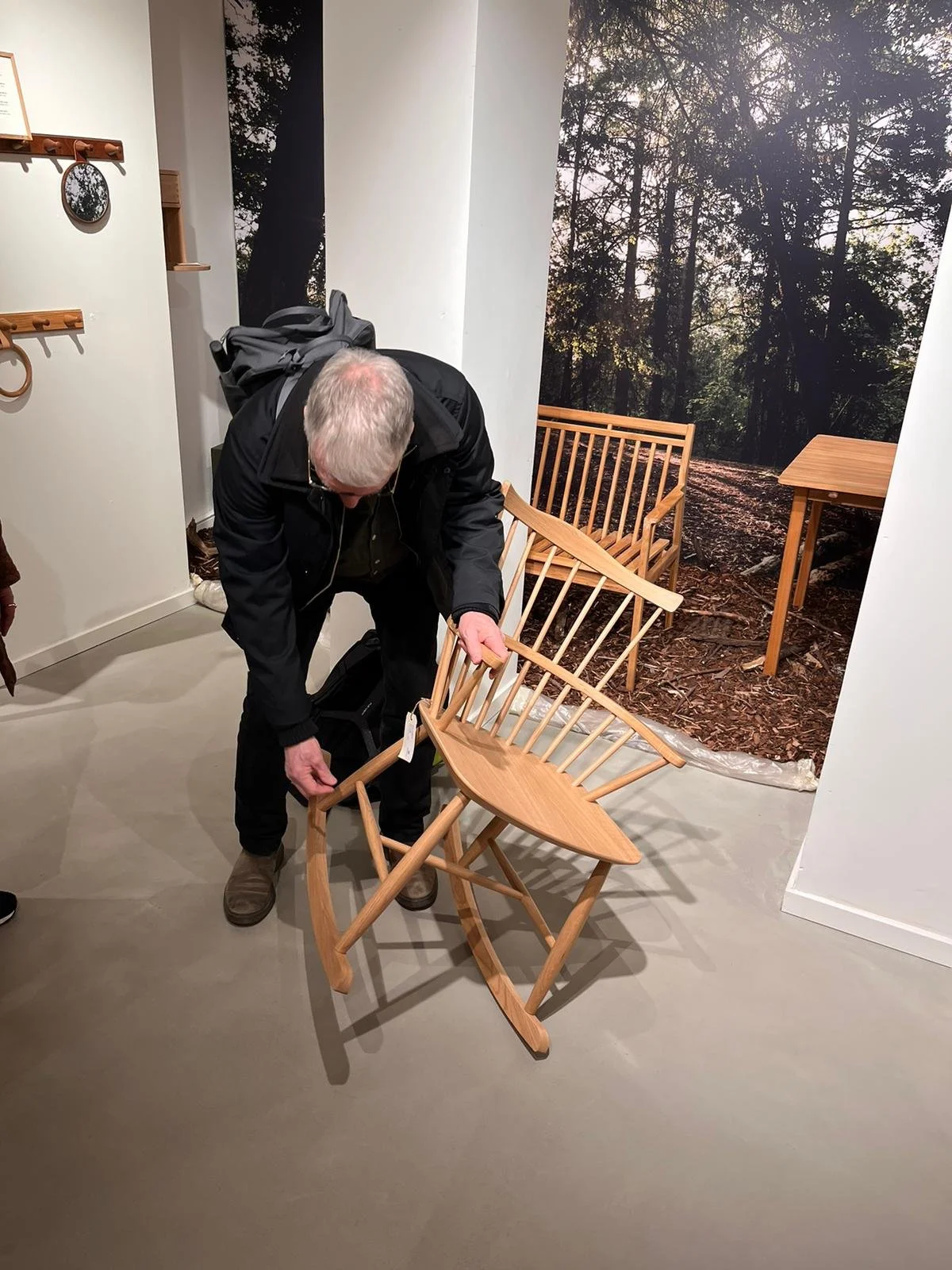
Flat-Pack Rocking Chair · Copenhagen, Spring 2023 · Plywood

A rocking chair in four parts, held together by nothing but its own geometry, and packed flat enough to ship home across an ocean.
The Brief
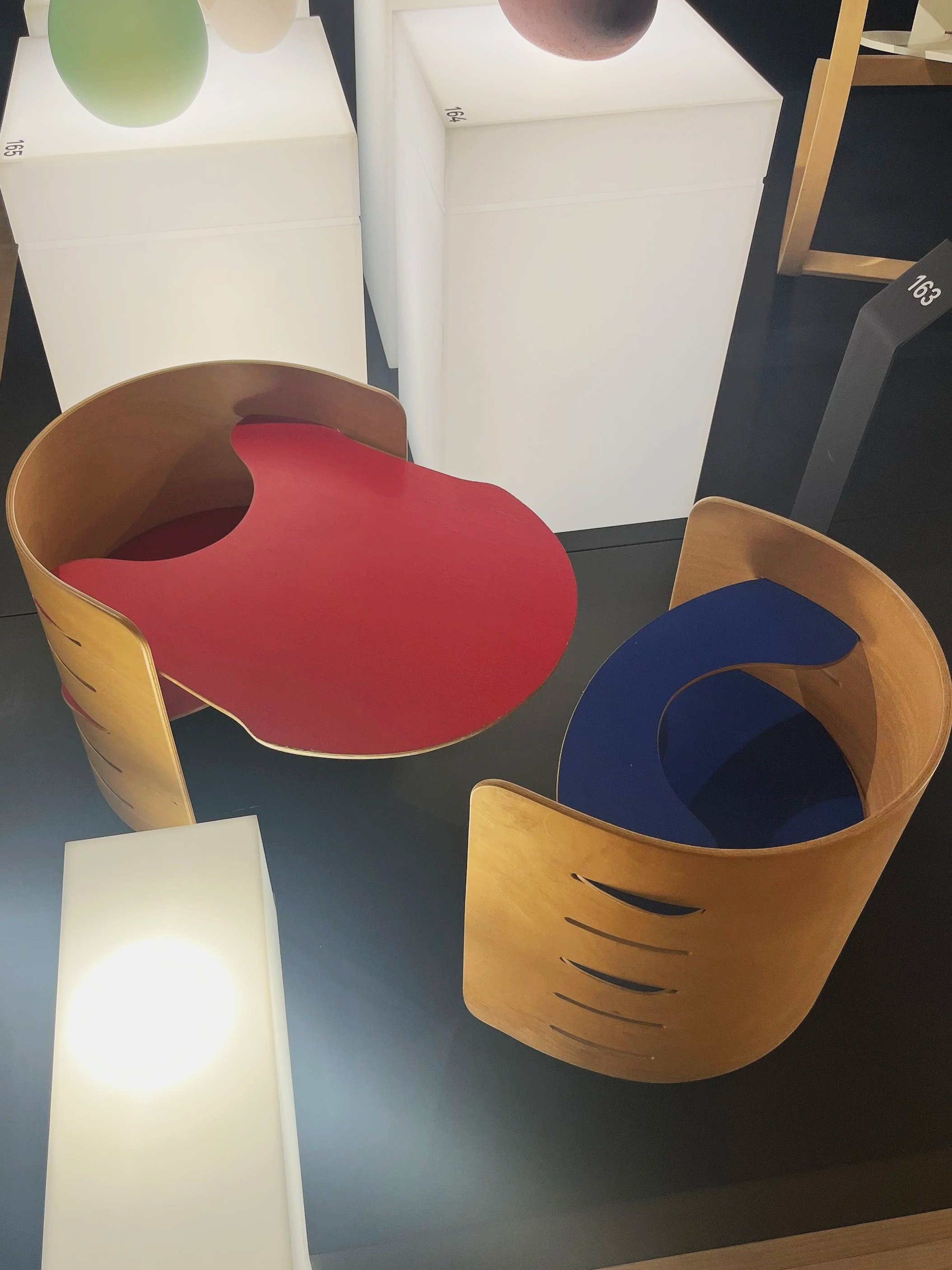
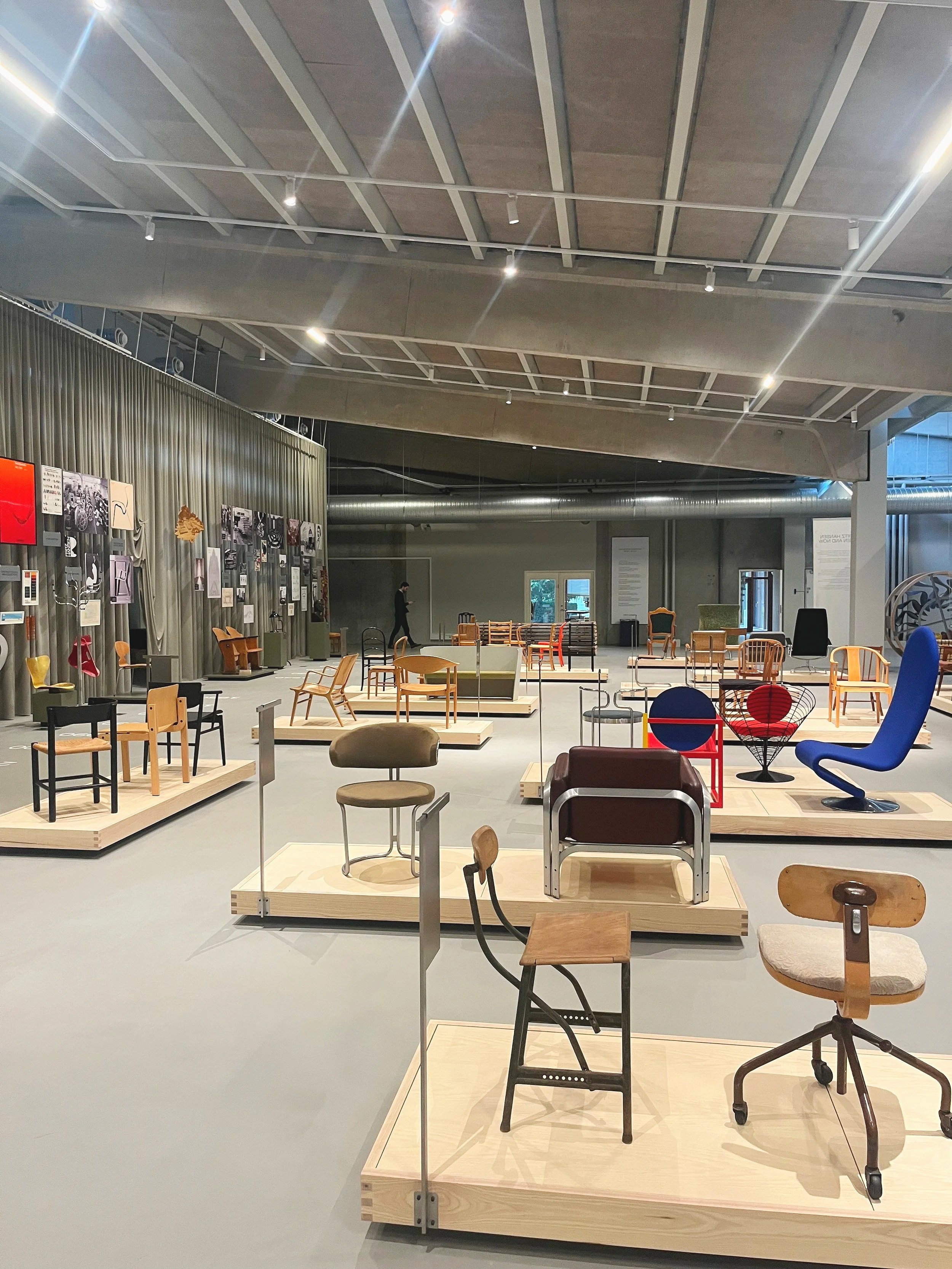
I spent the spring of 2023 in Copenhagen studying Danish furniture design, museums, showrooms, manufacturers, and collections across Scandinavia. The assignment at the end was narrow: design a Danish-inspired plywood chair that packs flat.
Why a Rocker?
After looking at several hundred chairs across Scandinavia, I kept coming back to rocking chairs. They're comparatively rare, and they have a playfulness most seating doesn't.
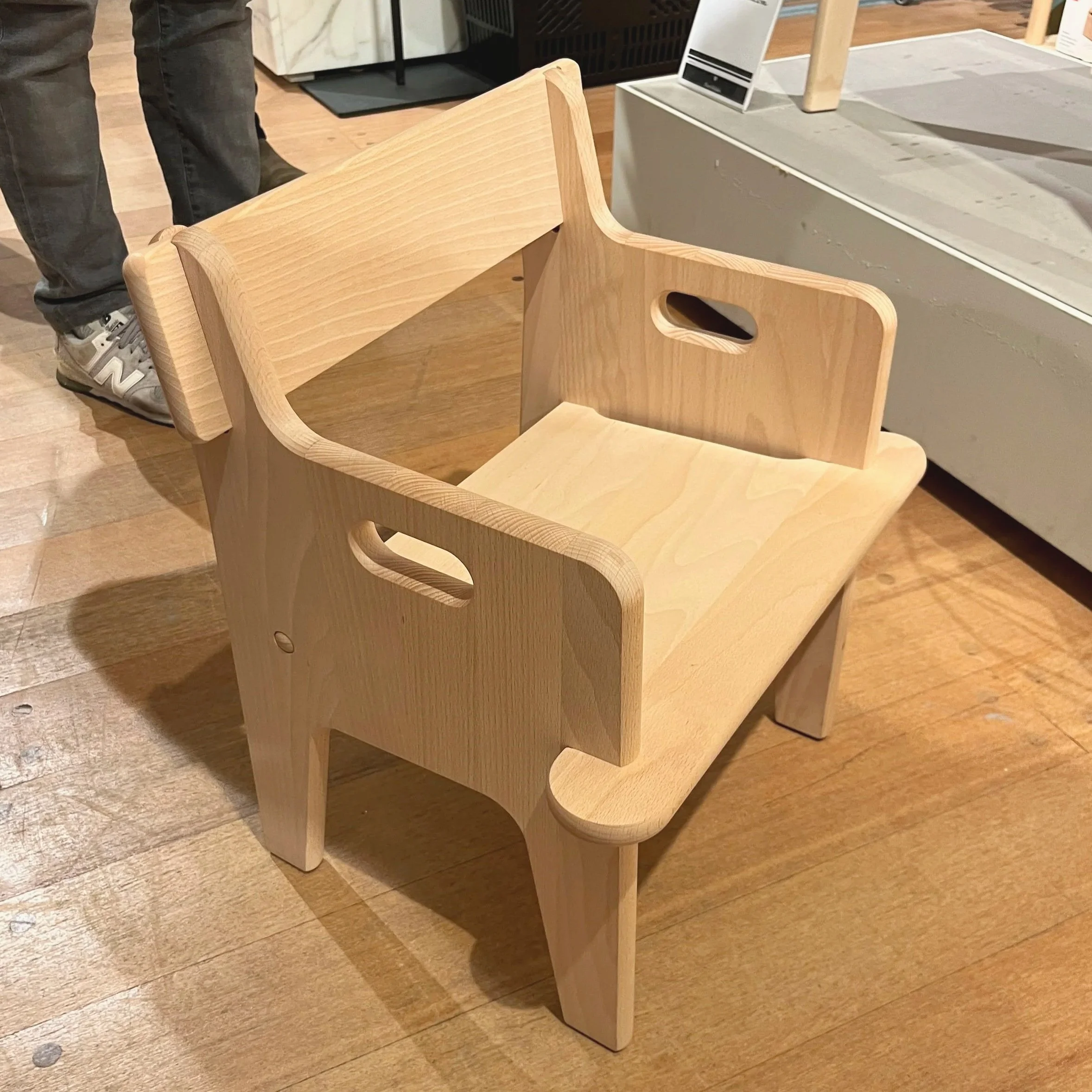
I drew most of my reference from Hans Wegner's 1944 CH410, "Peter's Chair”, a small chair that assembles from flat parts with no screws or glue, held together by interlocking geometry alone. It was the feeling that assembly is obvious: that you could hand someone the parts and they'd work it out.


Four Parts
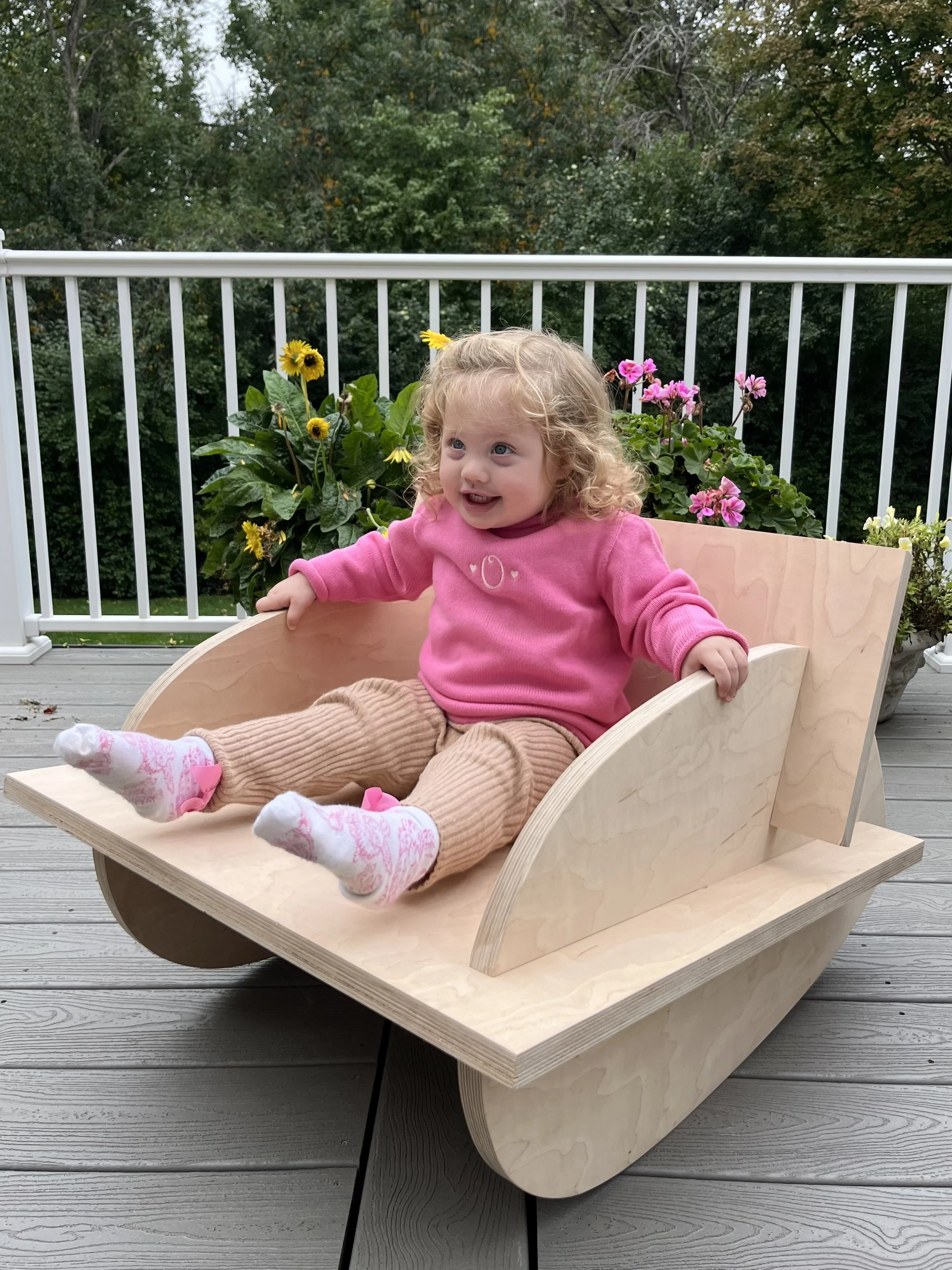
The chair is four pieces of plywood. Two shaped sides carry cutouts; the seat and back slide into them and lock. No fasteners, no glue, no tools.
Cutting those joints by hand was the constraint that shaped everything else. A locking joint has to be tight enough to hold a person and loose enough to fit together without a mallet, and I had a table saw and a router, not a CNC, to hit that window. I used a table saw to cut the joints; I purposely left them slightly tight so I could hand-sand them and ensure the tolerance was just right for use.
The Rockers Curve
The hardest part of the chair is the curve on the bottom of the two sides, and I had one shot at it.
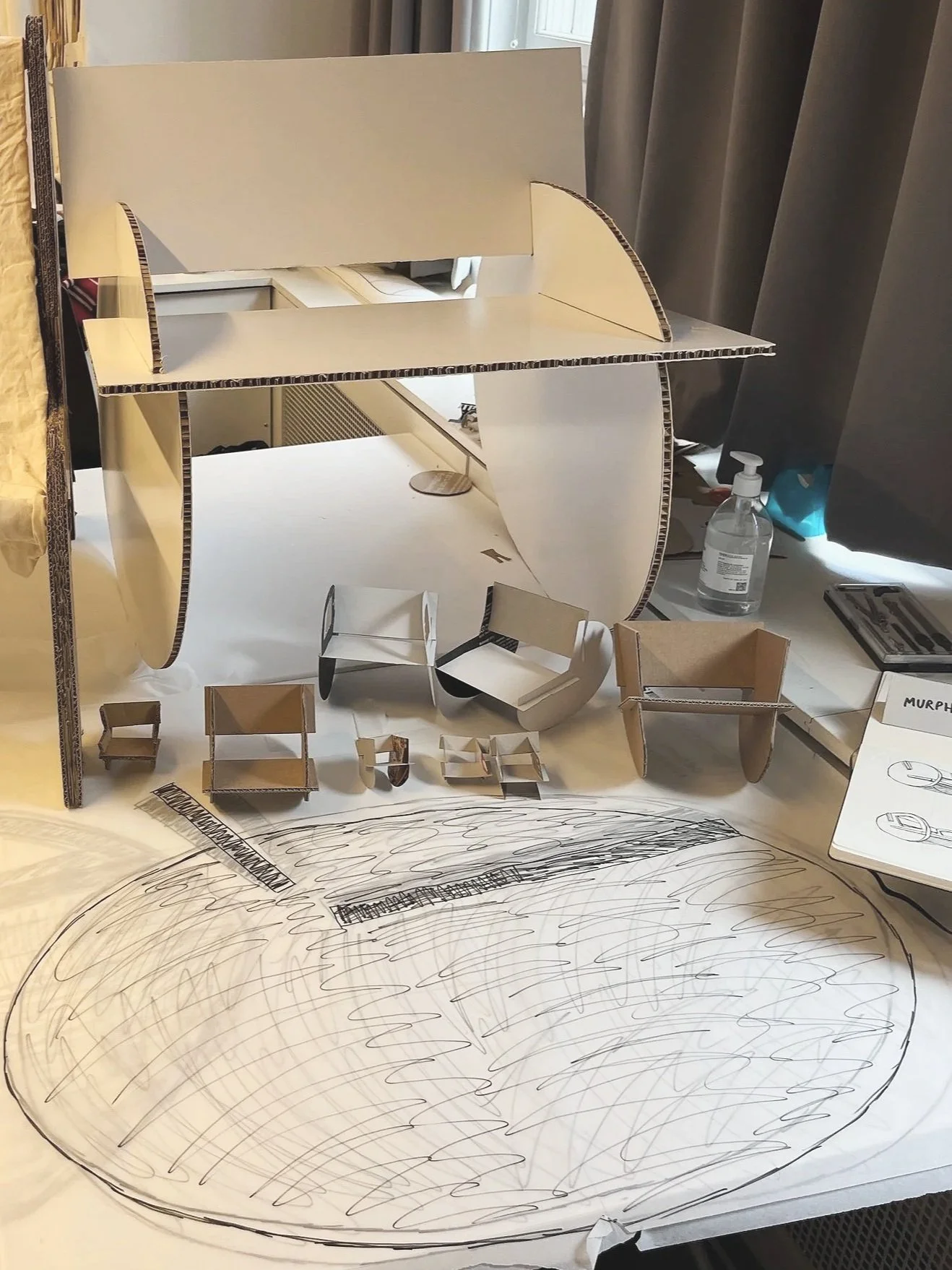
We couldn't prototype in wood. We couldn't cut a rocker, sit in it, and adjust; the first full-size pieces I cut were the chair itself. We had to resolve everything before that, using only sketches, scale models, and the chairs I'd spent the semester studying.
A rocker arc has a narrow window. Too flat and the chair barely moves. Too tight and it carries you past the balance point and tips you backward. The curve also has to match where a person's weight actually sits, not the middle of the seat.
To find it, I used dice as a stand-in for a person on my scale models, placed where a body's weight would fall, then rocked the model to see where the arc gave out. That's how I set the curve's degree, the shape of the sides, and the weight distribution before cutting anything full size.
Making the Chair
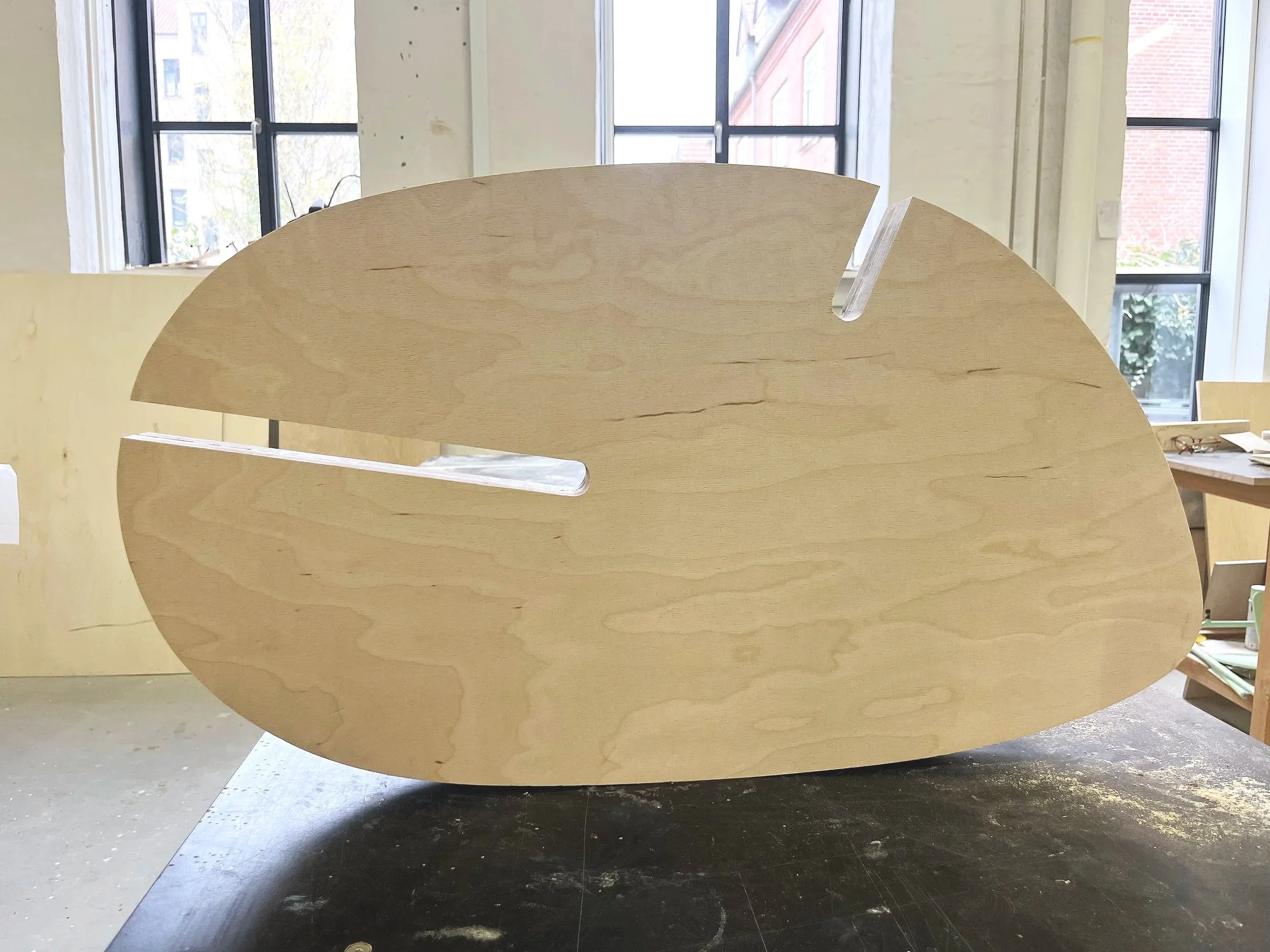
Inch-thick plywood from a local Danish forest, cut entirely by hand with a table saw, bandsaw, router, and a lot of sanding. I cut every locking joint by hand, without a CNC. I drew my parts to scale on tracing paper and transferred them directly to the plywood to ensure every cut was spot on.
Shipping the chair
The flat-pack claim got tested for real. At the end of the program, I packed the four parts into a box roughly three feet square and six inches deep, and shipped it from Copenhagen to the United States. It arrived a few days after I did. Every part came through undamaged, and the chair went straight back together.