Expanding Tree Barrier
Senior Capstone · Spring 2024 · Team of Two · Boulder, Colorado
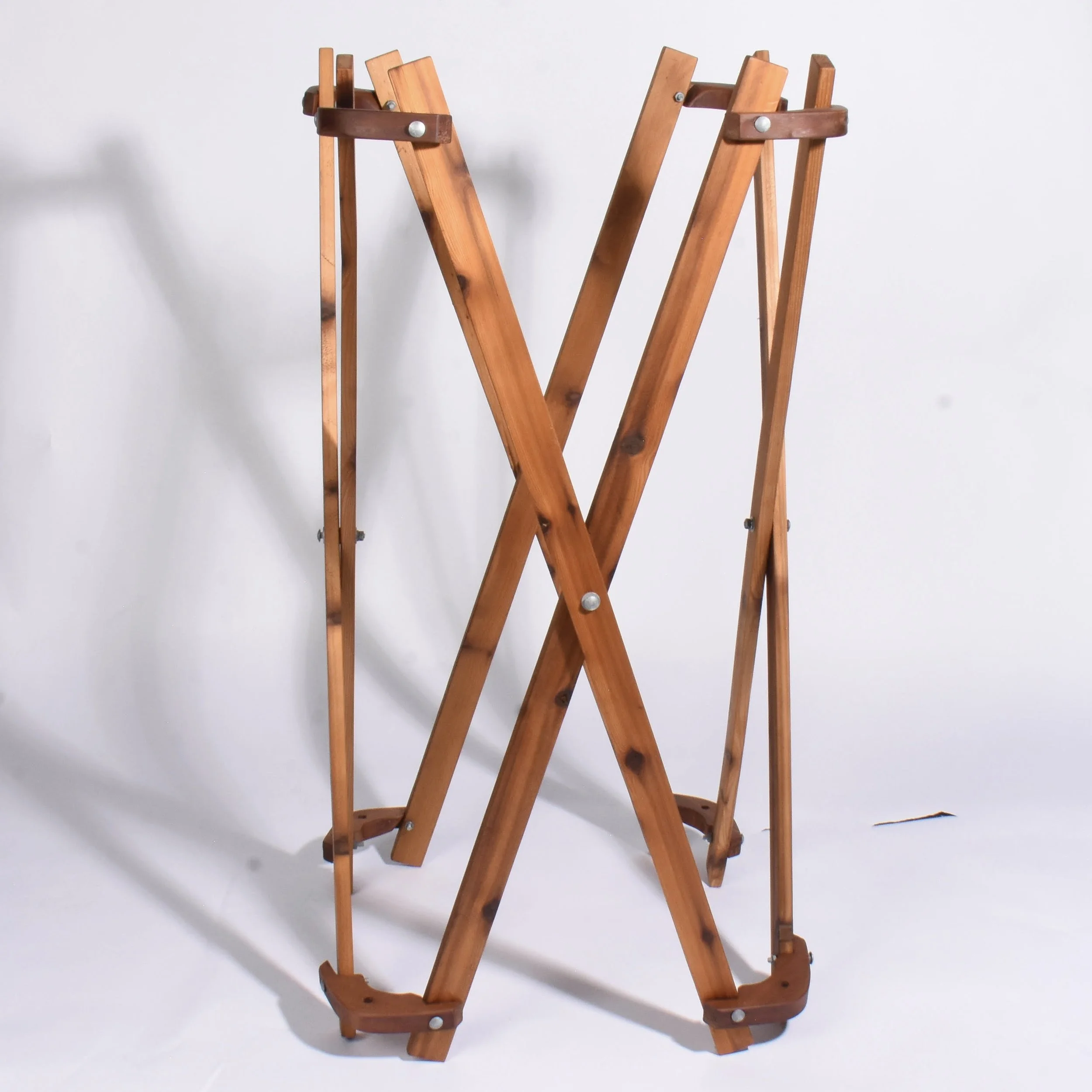
A cedar guard that opens as the tree grows, to protect from young kids climbing.
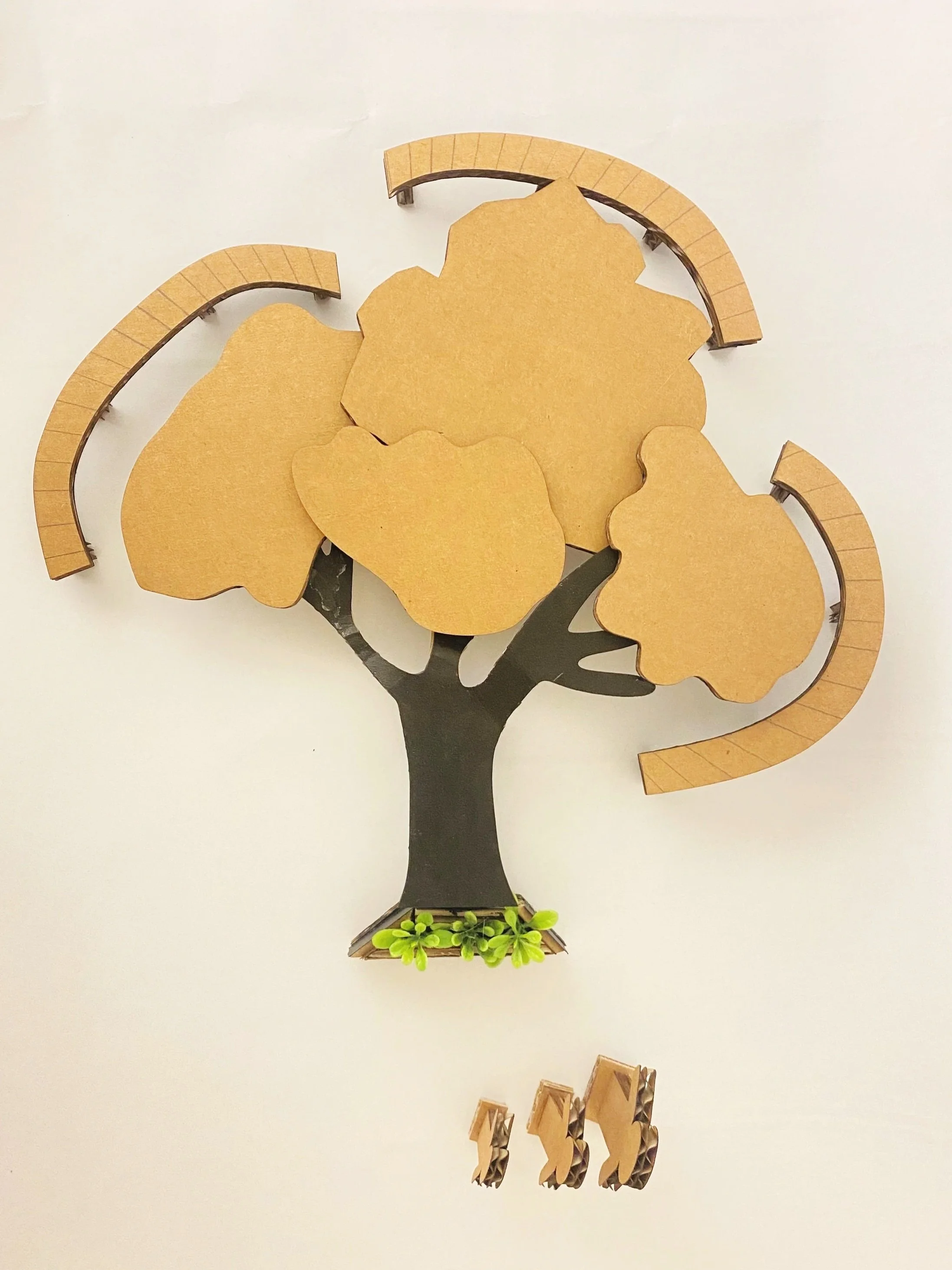
The Project That Didn't Happen
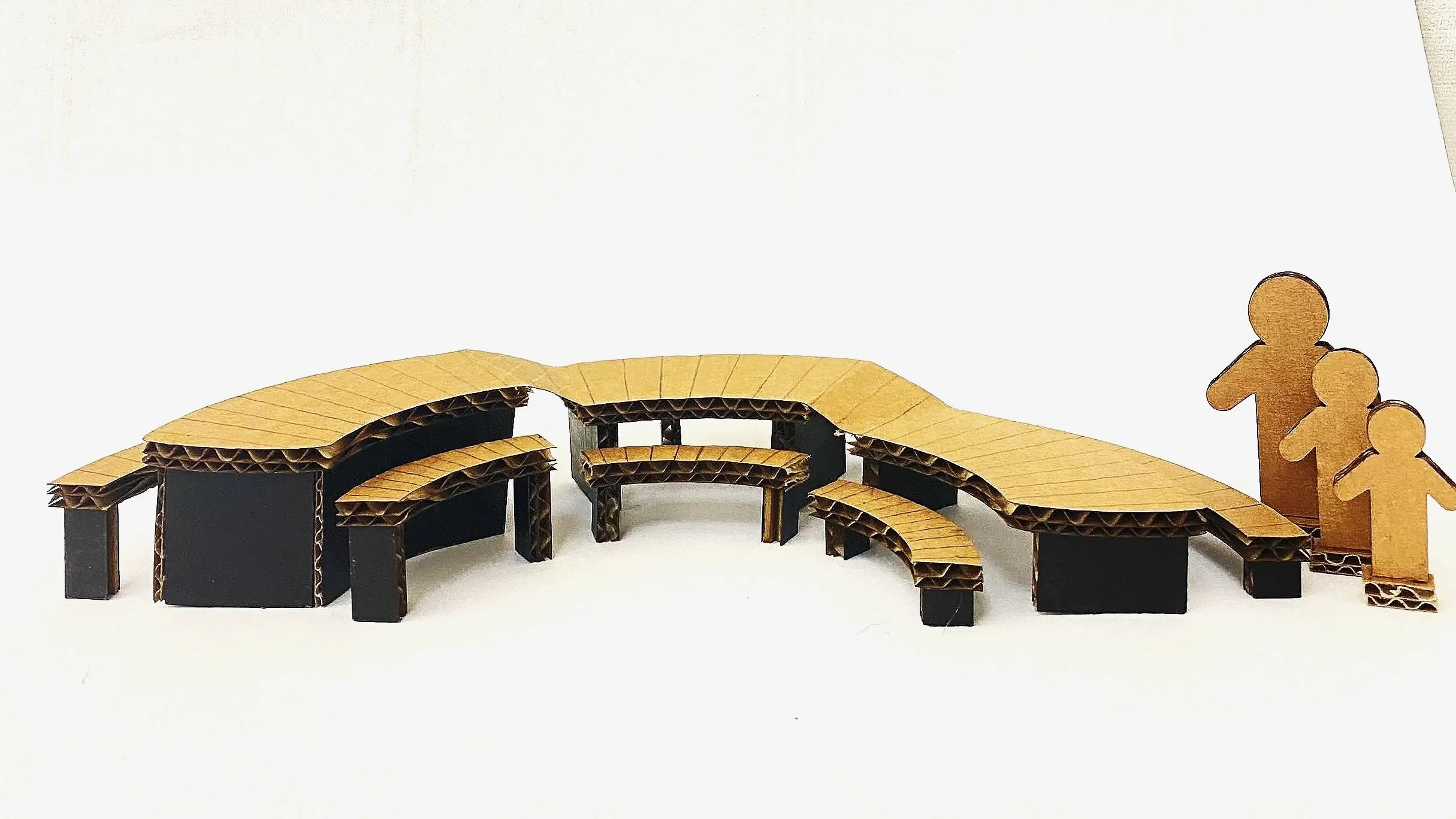
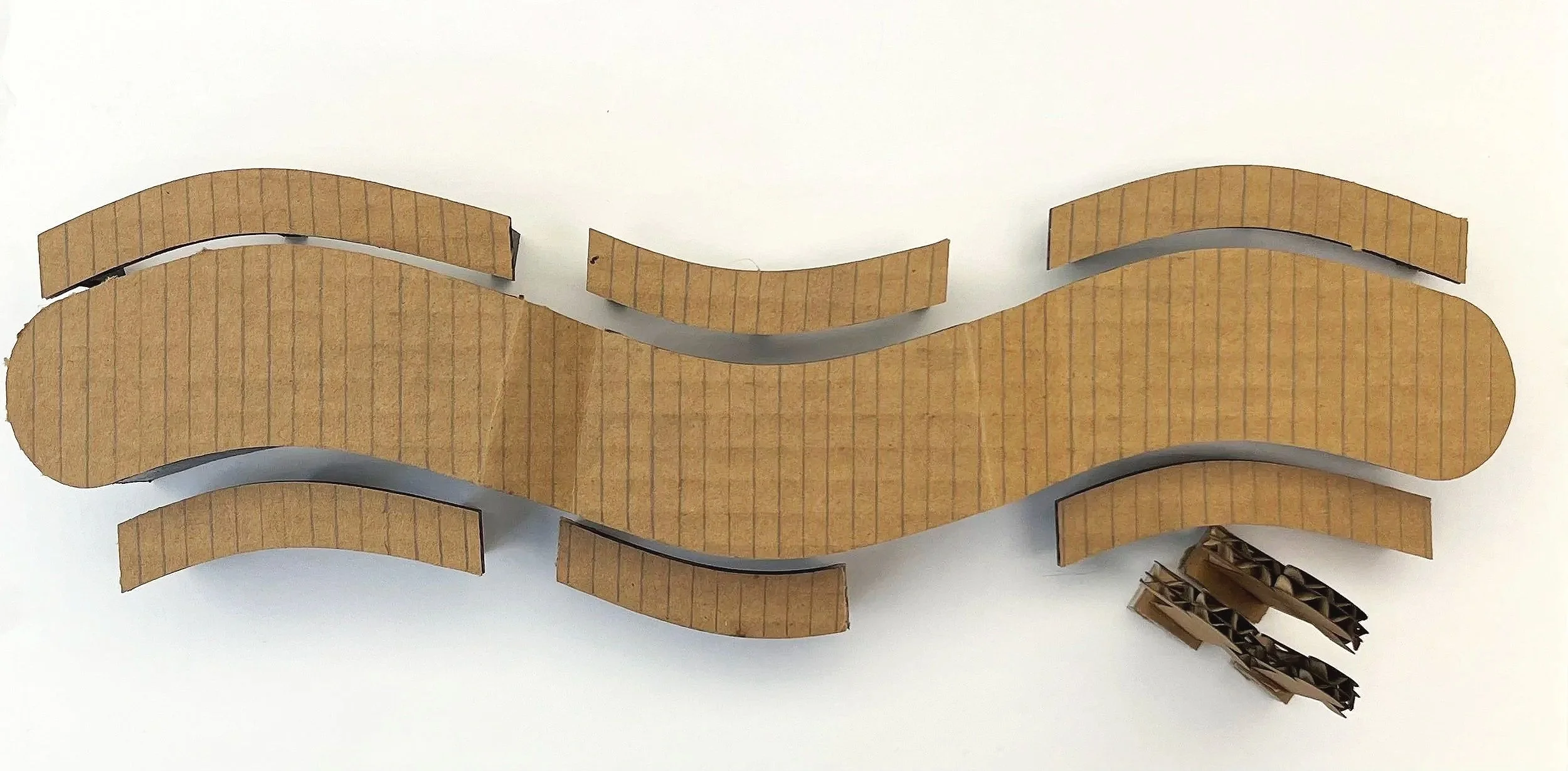
My capstone was supposed to be a large outdoor classroom table that seats 30 kids. It stalled, decisions didn't come back, and by the time it was clear the timeline wouldn't work, most of the semester was gone.
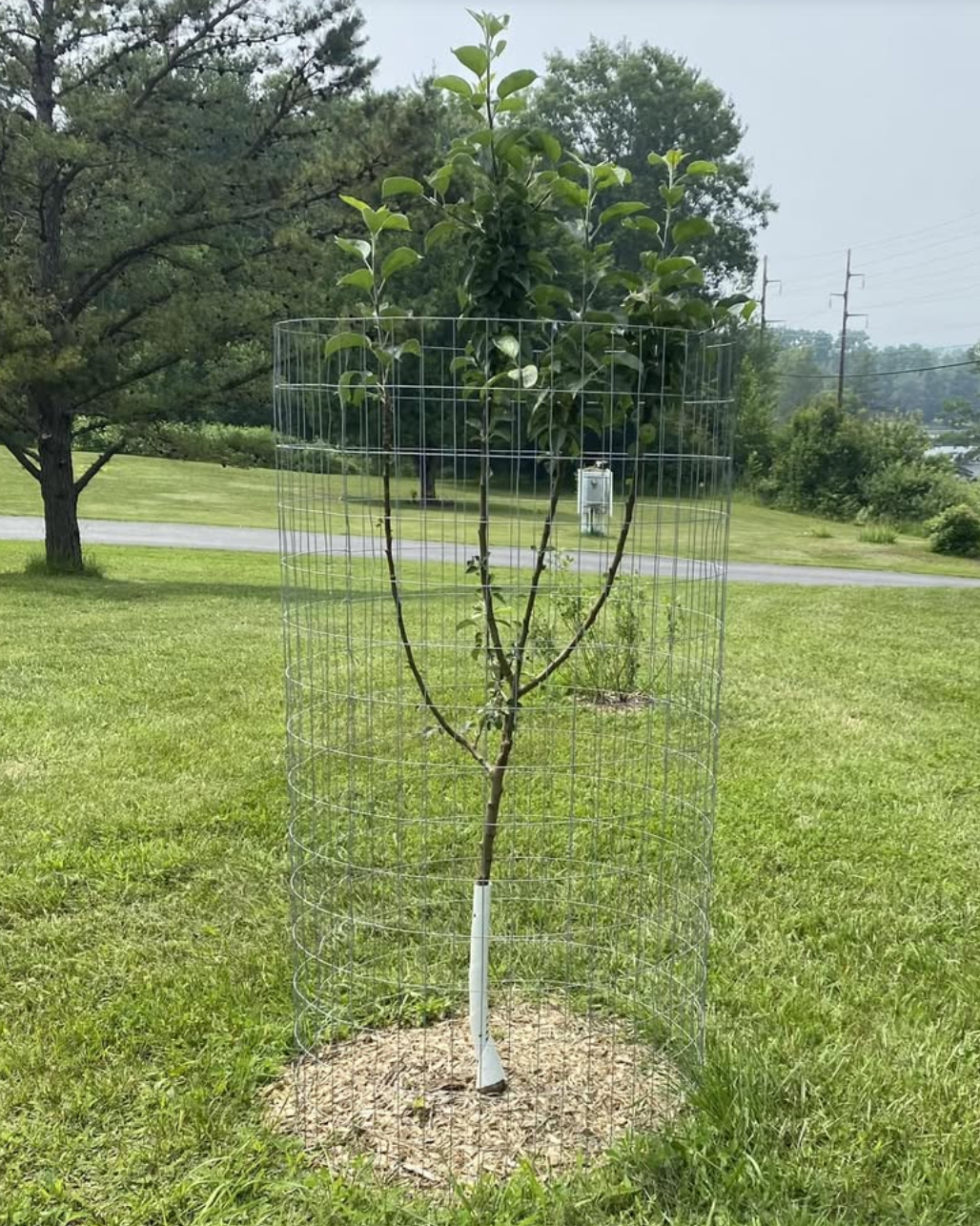
I told my professor we needed to change projects rather than finish a bad version of that one. He connected us with an elementary school that was about to plant a set of new trees and was looking for a way to defend the newly planted trees from the young kids.
The New Problem
Newly planted trees are fragile, and kids like to climb things. The school needed something to keep young trunks from being climbed while they were establishing.
The obvious answer is a fixed guard, but that won’t work for long. A tree that needs protecting is a tree that's growing, so anything sized to fit it today will be wrong within a couple of seasons, either outgrown and removed or left on too long and constricting.
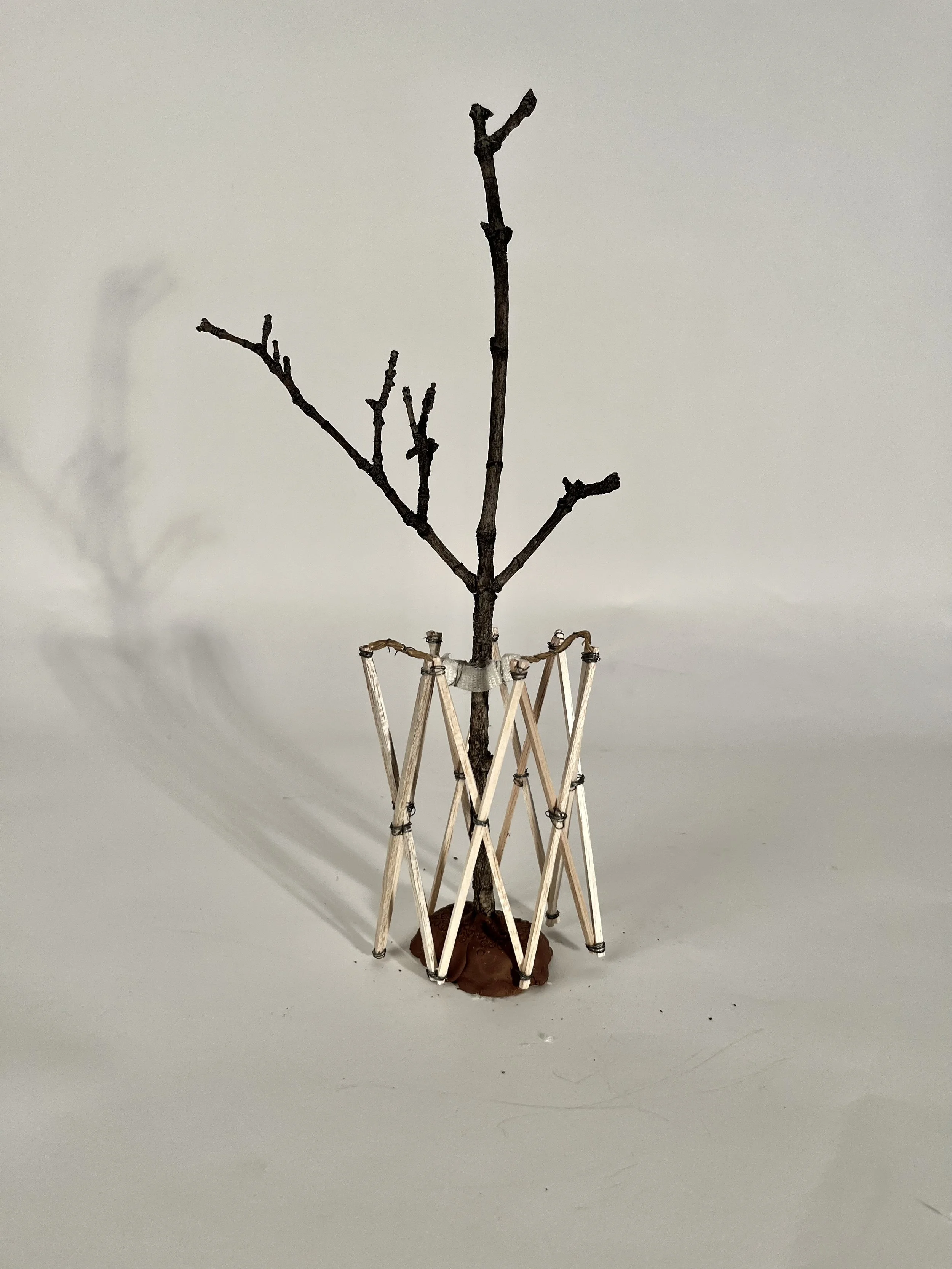
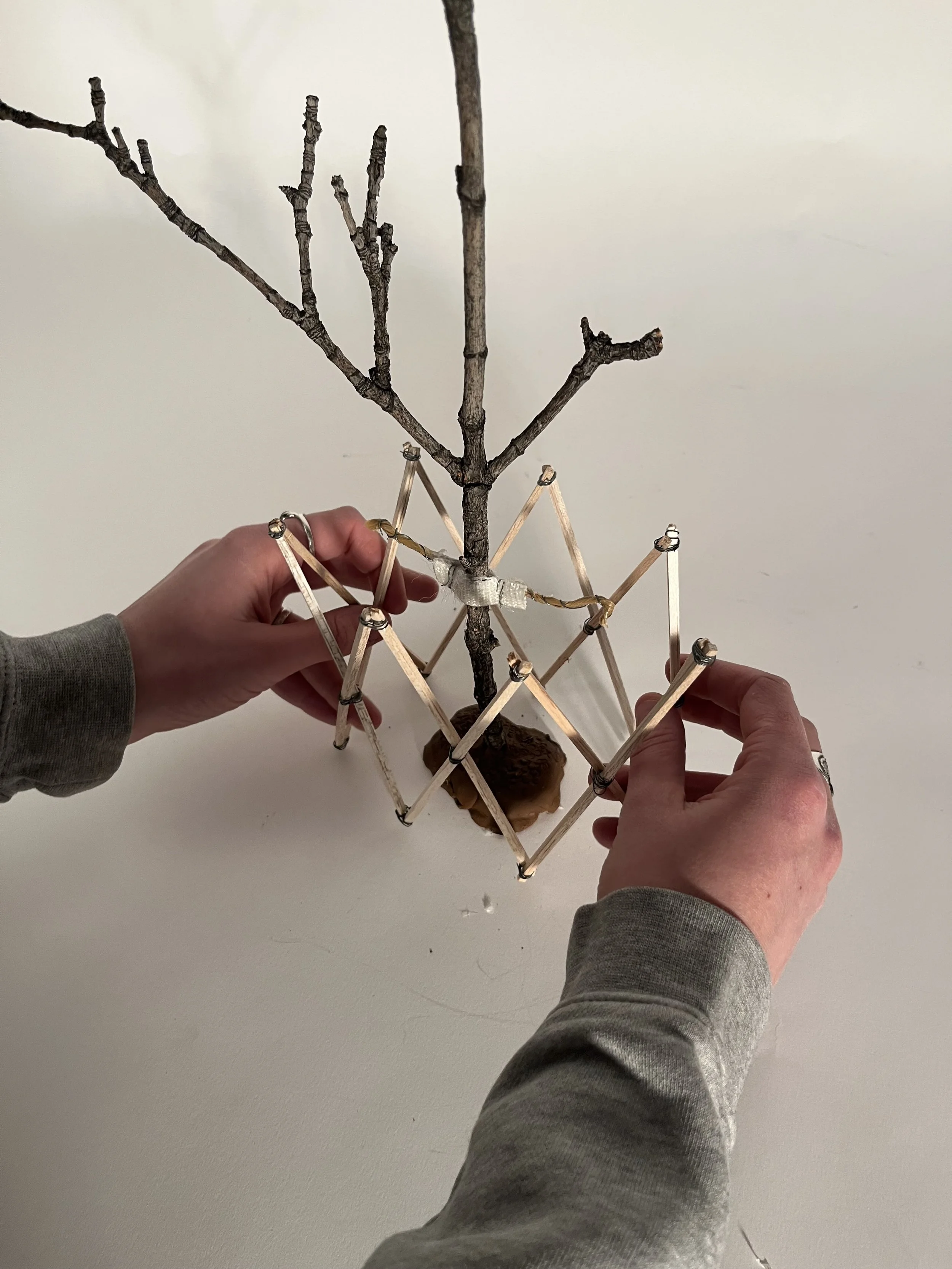
Borrowing The Mechanism
We took the principle from the Hoberman Sphere: scissor linkages that expand and contract as one connected system, where moving any part moves the whole.
Applied to a ring of cedar slats around a trunk, it gives you a guard that grows with the tree. As the tree fills out, someone opens the barrier a stage further rather than replacing it. One object across the whole vulnerable period instead of a sequence of disposable ones.
The Joint Problem
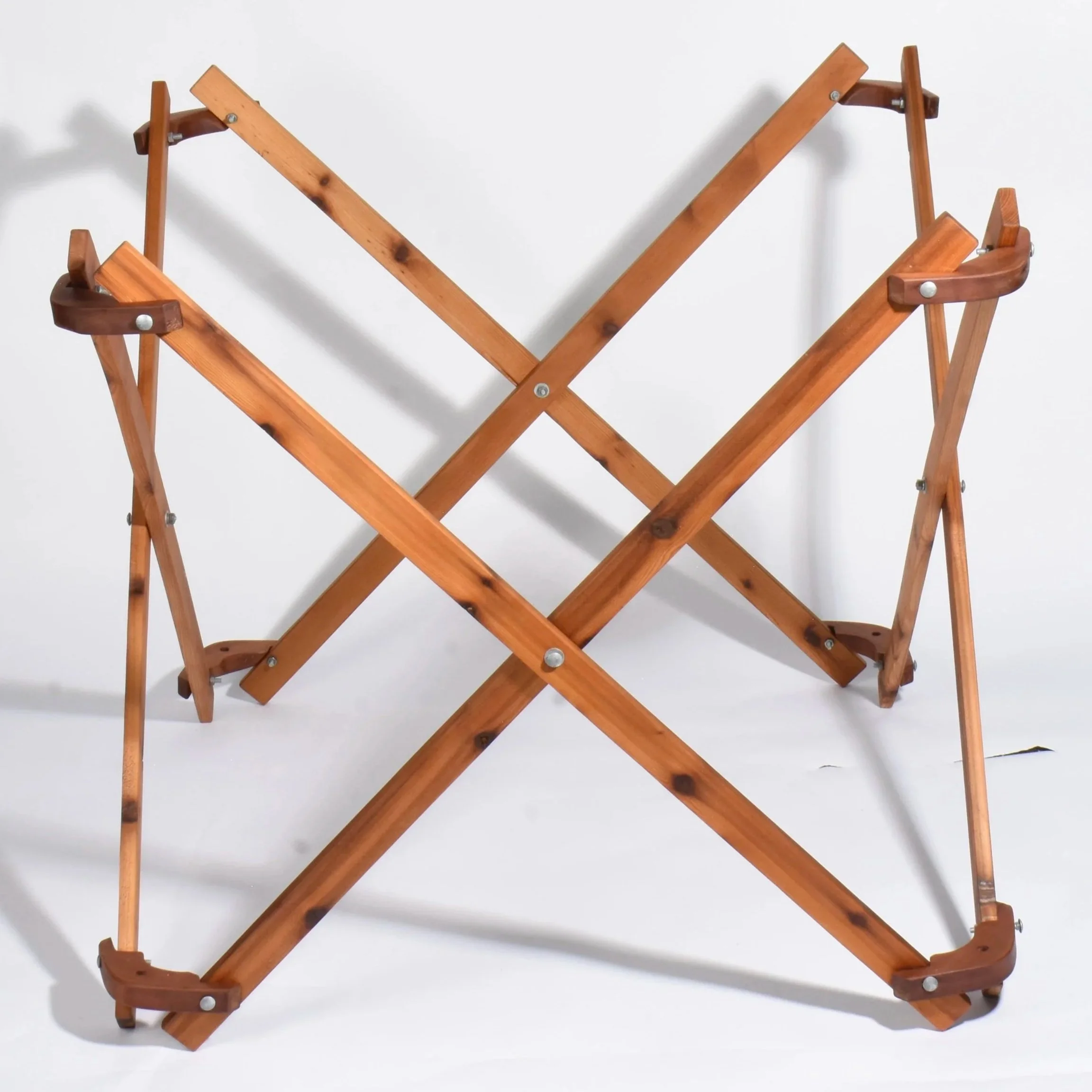
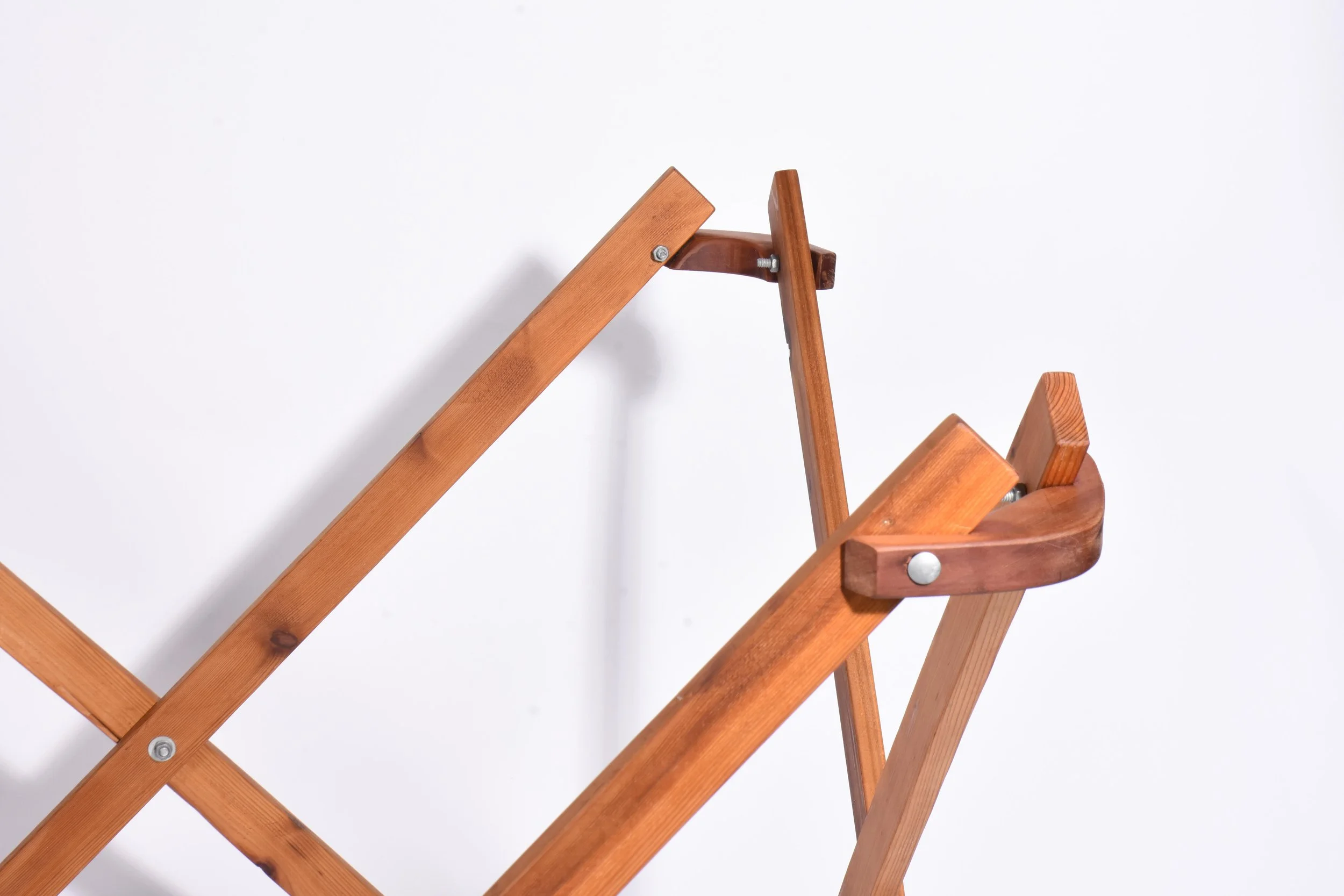
Every pivot in a scissor linkage has to do two contradictory things: hold the structure rigid enough to resist a child, and stay loose enough to move through its full range.
Getting that window by hand across dozens of slats meant the notches had to be identical, so we built jigs to cut them with enough engagement to lock and enough clearance to pivot, and repeated the process exactly. That took up most of the project's shop time.
Specification
1 × 4′ Closed
3–4′ Open, wide
2–3′ Open, tall
Materials: Cedar and Stainless Steel bolts
Cedar, for Colorado weather, holds up outdoors, unfinished, through sun and freeze-thaw without rotting out. Stake holes at the base fix it to the ground. Expansion is manual: someone opens it a stage as the tree needs it, keeping the mechanism simple and putting the decision in the hands of the people who see the tree every day.
Installation
Changing projects to standing in the schoolyard took slightly under a month. During that time, we worked out the linkage, built the jigs, cut and assembled the barrier, and installed it at the school on planting day, working alongside the crew as they planted the new trees.
What Happened
The kids thought it was great. They found it interesting, something that opened and moved, and they understood the tree inside wasn't for climbing.
That's the part I didn't design for, and I'd design for it deliberately next time. The barrier doesn't work by being an obstacle. It works by being more interesting than the tree.